What Is the Real Difference Between Manga and Light Novels?
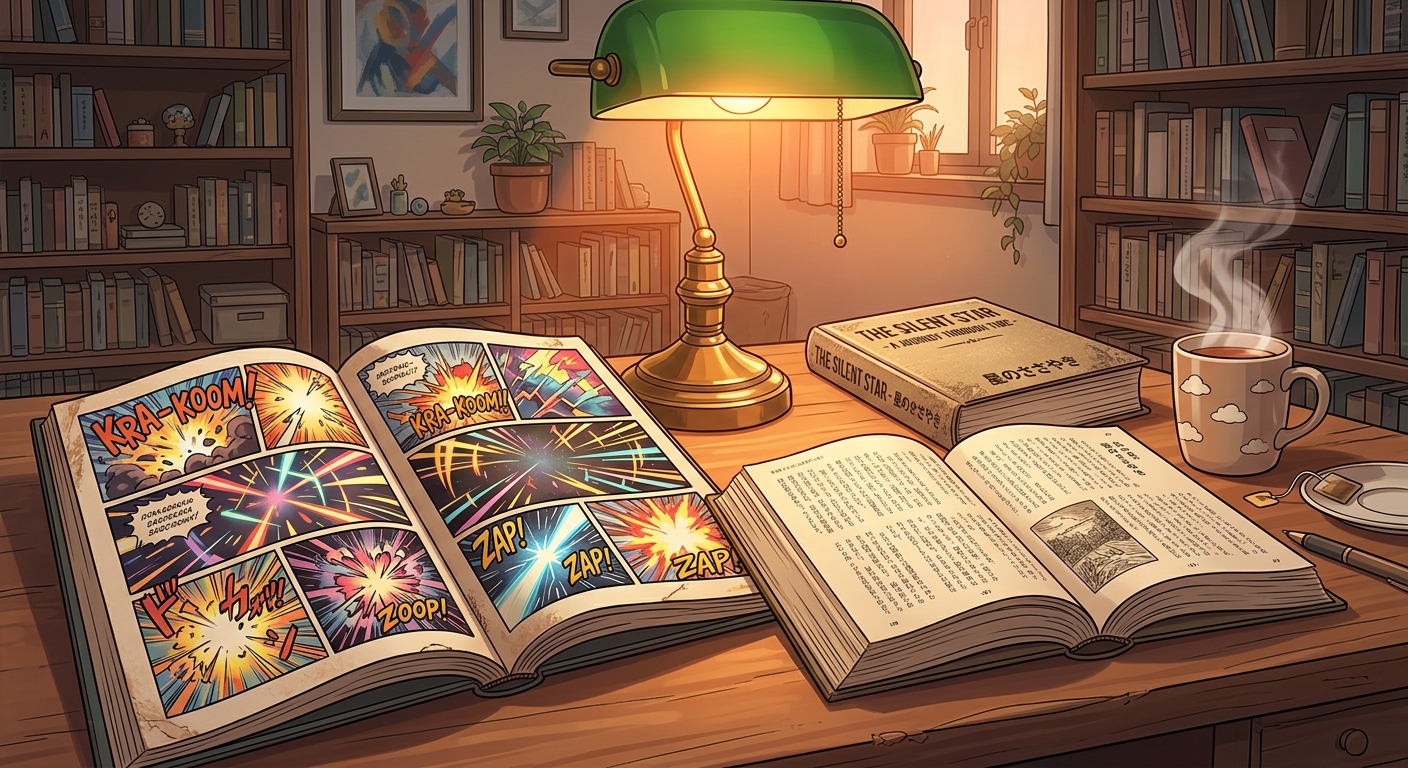
If you have been browsing anime recommendations and noticed that some shows are “based on the manga” while others are “based on the light novel,” you are not alone in wondering what the difference is. Here is the quick answer: manga tells stories primarily through sequential art panels (like a comic book), while a light novel tells stories primarily through prose text with occasional anime-style illustrations.
Both formats are wildly popular in Japan and increasingly in the West. Many beloved anime series — from Naruto to Sword Art Online — originated as one or the other. Understanding the difference between manga and light novels helps you pick the version of a story that matches how you like to consume fiction. Let’s break down exactly what each format offers.
Understanding Manga: The Power of Visual Storytelling
Manga is the Japanese term for comics. A typical manga volume runs around 180 to 200 pages and is read from right to left — the opposite of Western comics. Nearly every page is filled with illustrated panels that show character expressions, action sequences, and environments visually. Dialogue appears in speech bubbles, and narration is kept minimal.
The biggest advantage of manga is pacing through art. A skilled manga artist can convey an entire emotional beat — a character’s shock, a plot twist, a devastating punch — in a single panel without a word of text. Action scenes feel dynamic because the artist controls exactly what you see and when. This makes manga inherently fast to read. Most people can finish a standard manga volume in 30 to 60 minutes.
Manga also excels at expressive character design. You immediately understand a character’s personality through their appearance, body language, and visual quirks. There is no need for the author to describe what someone looks like — you simply see it.
For beginners, manga is often the easiest entry point into Japanese fiction. The visual format requires no adjustment period, and the shorter volume length makes it easy to sample a series without a major time commitment.
Understanding Light Novels: Deep Dives into World-Building
A light novel is a style of Japanese prose fiction aimed at young adults. Each volume is typically 200 to 300 pages of text — roughly 40,000 to 50,000 words — with around 5 to 10 anime-style illustrations scattered throughout. Think of it as a short novel with occasional pictures rather than a comic with occasional text.
The defining strength of light novels is internal access to characters’ thoughts. Because the format is prose, authors can spend paragraphs inside a character’s head, exploring their reasoning, doubts, and motivations in a way that manga panels simply cannot. If you enjoy understanding exactly why a character makes a specific decision, light novels deliver that depth consistently.
Light novels also tend to excel at detailed world-building and lore. Fantasy and isekai (transported-to-another-world) series in particular use prose to explain magic systems, political structures, and historical backstories that would require dozens of manga chapters to convey visually. Series like Sword Art Online, Re:Zero, and Overlord built their massive fanbases on this kind of immersive textual detail.
The trade-off is time investment. A light novel volume takes most readers 3 to 6 hours to finish, compared to under an hour for a manga volume. You are committing to a longer, slower, but often richer experience.

Sword Art Online 1: Aincrad (light novel)
Manga vs Light Novel: Which Format Is Right for You?
Reading Speed and Engagement
This is the most practical difference when deciding between manga and a light novel. Manga is fast. You can blow through an entire story arc in an afternoon. The visual format keeps your eyes moving, and cliffhanger page turns make it addictive. If you prefer quick, punchy reading sessions — or if you are squeezing reading into a commute — manga fits more naturally into short windows of time.
Light novels require patience. You are reading prose, processing descriptions, and building the world inside your own imagination. The payoff is a deeper sense of immersion. When a light novel clicks, it feels like sinking into a good novel rather than watching a show. If you already enjoy reading Western fantasy or sci-fi novels, light novels will feel immediately familiar.
Neither format is “better” — they serve different reading modes. Many fans read both, choosing manga when they want something visual and quick, and light novels when they want to lose themselves in a longer narrative.
Anime Adaptations: Which Format Stays Truer to the Source?
This matters more than most beginners realize. When an anime is adapted from a manga, the translation is often close to one-to-one. The anime studio has panels to reference for shot composition, character expressions, and pacing. Iconic manga scenes frequently appear in the anime almost exactly as the artist drew them. Series like My Hero Academia and Jujutsu Kaisen demonstrate this tight fidelity.
When an anime is adapted from a light novel, more content tends to get cut. Internal monologues are shortened or removed. World-building details are simplified. Entire subplots sometimes disappear to fit within a 12- or 24-episode season. This is why light novel fans frequently say the anime “left out the best parts.” The Sword Art Online anime, for example, condenses significant character development and lore from the light novels into fast-paced action sequences.
If you have watched an anime adaptation and felt like something was missing — like the story had gaps or characters seemed underdeveloped — checking whether the source is a light novel is a smart move. The original text often fills in exactly what the anime skipped.
Our Top Recommendations to Start With
The best way to understand the manga vs light novel difference is to experience both formats with the same story. Sword Art Online is ideal for this comparison. Reki Kawahara’s original light novel delivers Kirito’s inner thoughts, detailed game mechanics, and world-building that the anime compressed. The manga adaptation by Tamako Nakamura retells the same Aincrad arc through dynamic art and faster pacing, giving you a visual version of the same events.
Try reading volume 1 of each format. You will immediately feel the difference: the light novel pulls you deeper into the world and the protagonist’s psychology, while the manga moves through the action and emotional beats with visual impact and speed. Whichever version resonates more will tell you a lot about your preferred format going forward.
If you decide manga is your thing, the entire medium is waiting for you — from shonen action to slice-of-life to horror. If light novels click, series like Re:Zero, Mushoku Tensei, and The Apothecary Diaries offer hundreds of hours of rich prose storytelling. Either way, you are stepping into a world of incredible fiction.

Sword Art Online 1: Aincrad (manga)
Leave a Reply