
Is the Attack on Titan Manga Worth Reading Today?
Yes — the Attack on Titan manga is absolutely worth reading, even if you have already watched every episode of the anime. Hajime Isayama’s original 34-volume series delivers a rawer, more detailed experience that the animated adaptation simply could not replicate frame for frame. Whether you are a longtime fan or a total newcomer, reading the manga unlocks layers of story, art, and character depth that stand on their own.
This attack on titan manga review breaks down exactly what makes the print version special, where it differs from the anime, and the smartest way to start collecting it today.
The Raw Appeal of Hajime Isayama’s Original Art
When Attack on Titan debuted in Bessatsu Shonen Magazine in 2009, Isayama’s art was rough. Character proportions were inconsistent, backgrounds were sparse, and action panels sometimes felt cluttered. For many readers, though, that roughness is part of the appeal. The early chapters feel desperate and chaotic — which perfectly matches the story’s tone of humanity on the brink of extinction.
Isayama himself has spoken openly about his limitations as a draftsman in the early years. His titan designs were intentionally unsettling — exaggerated grins, misshapen bodies, blank staring eyes — and the imperfect linework only amplified that uncanny horror. This is not a series that needed polished art to succeed. It needed art that made you uncomfortable, and it delivered.
What makes the manga a visually rewarding journey is watching Isayama’s skills evolve in real time across 139 chapters. By the Marley arc, his panel compositions are cinematic. Wide establishing shots of Liberio carry real atmosphere. Close-ups of Reiner’s exhausted face tell entire stories without a single word of dialogue. Titan designs carry genuine weight and horror. Reading from Chapter 1 to Chapter 139 is like watching an artist level up before your eyes, and that transformation is something you can only experience in the manga.
Uncensored Details: What the Anime Left Out
The anime adaptation by WIT Studio and later MAPPA is excellent, but it was produced for broadcast television. That means certain scenes were toned down. The manga features more graphic depictions of titan attacks, human casualties, and the sheer brutality of the world Isayama created. Panels linger on the aftermath of battles in ways that the anime’s pacing does not allow.
There is also the matter of control. In the manga, you decide how long to look at a disturbing panel. You can study the details of a titan’s anatomy, notice background characters reacting in horror, or simply turn the page when you have had enough. The anime decides that timing for you. For a series built on dread and tension, that difference in reader agency matters more than you might expect.
Beyond the violence, the manga includes deeper internal monologues that give characters like Eren, Reiner, and Historia additional psychological texture. Subtle facial expressions — sometimes just a single silent panel — carry enormous narrative weight. Isayama frequently uses a technique where a character says one thing while their face communicates the opposite, and these moments land with far more impact on the printed page where you can study them closely. These quiet moments are often condensed or cut entirely in the anime to maintain episode runtime.
Attack on Titan Manga vs Anime: Key Differences
If you are wondering whether the manga offers anything truly new compared to the anime, the answer is yes. Two areas stand out above the rest: the Uprising Arc and the ending.
Pacing Changes in the Uprising Arc
The Uprising Arc (roughly Chapters 51–70) is where the manga and anime diverge the most. In the anime, this arc was significantly condensed. The production committee reportedly requested changes to accelerate the pacing and get to the action sequences faster. The result was a tighter, more action-focused season that prioritized spectacle over political intrigue.
In the manga, however, the Uprising Arc reads like a political thriller. It spends far more time on the corruption within the walls, the power struggles between military factions, and the history of the Reiss family. You get extended scenes of the Survey Corps operating as fugitives, navigating betrayals from within the military police, and questioning whether the government they serve is worth protecting at all.
Characters like Historia and Levi receive substantially more development in these chapters. Historia’s transformation from a passive background character into someone who actively shapes the future of the walls is one of the best character arcs in the entire series, and the manga gives it the breathing room it deserves. If you felt that Season 3 Part 1 moved too quickly, the manga version is the definitive way to experience this arc.
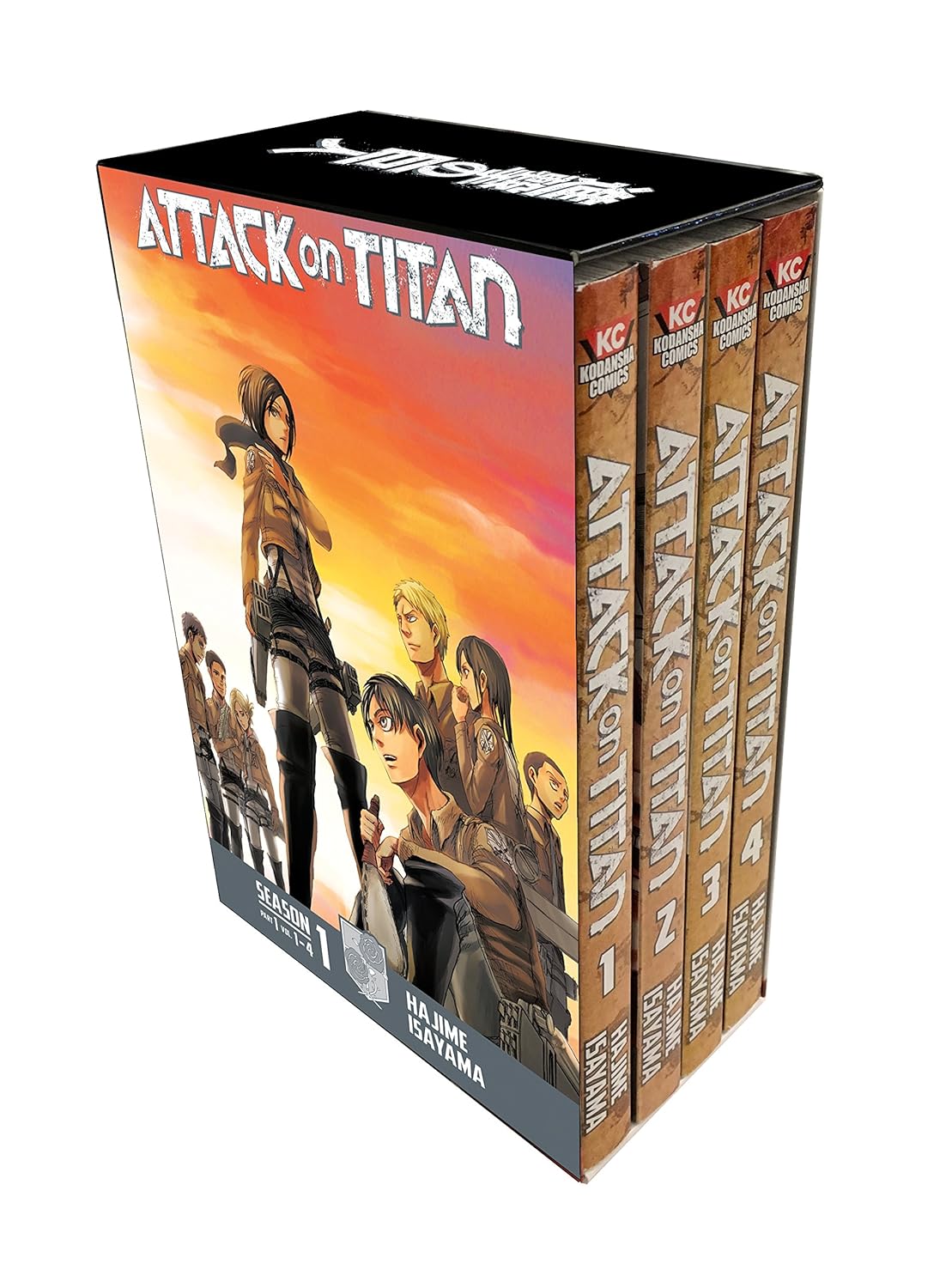
Attack on Titan Season 1 Part 1 Manga Box Set
Experiencing the Ending in Print
The ending of Attack on Titan divided the fanbase. Chapter 139 and the additional pages Isayama added later sparked intense debate online. Regardless of where you fall on that spectrum, reading the ending in print offers something the anime cannot: your own pace.
In the anime finale, scenes move at the director’s tempo. In the manga, you can pause on a panel, re-read a page, and sit with the emotional weight of each moment as long as you need. Many readers who initially disliked the ending found it more satisfying on a second or third read-through in print, when they could absorb the visual storytelling without the pressure of a runtime clock.
The additional pages that Isayama drew for the final volume release also expand on certain plot points that felt rushed in the original magazine chapter. These extra pages are included in the collected volumes, so anyone buying the manga today gets the most complete version of the ending available. For a story this long and this emotionally complex, having the freedom to sit with the final pages — to flip back and forth and piece together the thematic threads — is a significant advantage over watching it unfold in a single broadcast.
How to Collect the Attack on Titan Manga
With 34 volumes total, jumping into the Attack on Titan manga can feel overwhelming for a new reader. The good news is that there are two excellent format options designed for different types of buyers.
Manga Box Sets vs. Colossal Editions
Box Sets are the most cost-effective way to read the series in bulk. Each set bundles multiple standard-sized volumes together at a lower per-volume price than buying individually. They often include bonus items like exclusive cover art or mini posters. If you are an anime fan who wants to catch up on the full story quickly, box sets are the practical choice.
Colossal Editions are oversized omnibus volumes that collect roughly five volumes each. The pages are significantly larger than standard manga tankoubon — close to the original magazine serialization size. This means you see Isayama’s artwork the way it was drawn, with fine details in titan anatomy and battle scenes that get lost at smaller print sizes. For collectors who want a premium reading experience, the Colossal Editions are the strongest option.
There is also a practical consideration: shelf space. The standard 34 volumes take up a significant amount of room. The Colossal Editions consolidate the same content into fewer, larger books, which can actually be easier to store and display despite their individual size. If you have limited shelf space but still want a physical collection, the Colossal format is worth considering for that reason alone.
For most beginners, starting with a box set is the smartest move. You get a large chunk of the story at the best price. If you fall in love with the series and want to revisit it in a deluxe format, the Colossal Editions make an excellent second purchase for your shelf.

Attack on Titan Colossal Edition 1
Final Verdict: Read the Manga
The Attack on Titan manga is not just a companion piece to the anime — it is the definitive version of the story. Isayama’s evolving art, the uncensored detail, the richer pacing of arcs like the Uprising, and the ability to experience the ending on your own terms all make a compelling case for picking up the print edition.
At 34 volumes, this is a complete story with a beginning, middle, and end. There is no waiting for new chapters, no hiatus anxiety, and no risk of the series being canceled before it finishes. You can read the entire attack on titan manga review-worthy saga from the fall of Wall Maria to the final chapter at whatever pace suits you. That sense of completion is rare in manga, and it makes the series an ideal recommendation for newcomers to the medium.
If you loved the anime, the manga will deepen that experience. If you have never watched a single episode, the manga is a perfectly valid — and arguably superior — starting point. Either way, this is one of the most important manga series of the last two decades, and it deserves a spot on your shelf.
Leave a Reply