
What “Cozy Mystery” Actually Means in Manga
If you love cozy mystery novels — think Miss Marple solving a village murder over tea, or a retired librarian piecing together a quiet crime — and you want that same feeling in manga form, you’ve probably run into a problem: most “mystery manga” lists are full of titles that have nothing to do with cozy mysteries.
Case Closed (Detective Conan)? A procedural crime series — one that follows a detective through one crime scene after another — with over 100 volumes. Kindaichi Case Files? Dark murder mysteries with graphic deaths. Both are great, but they’re not what beginners looking for cozy mystery manga are after.
Cozy mystery is a specific genre with four recognizable markers:
- Amateur investigator — the solver is not a police officer or professional detective. They’re curious, observant, and motivated by personal interest.
- No graphic violence — dark acts may exist in the story, but they’re never shown viscerally. The focus is on the puzzle, not the crime.
- Warm or intimate setting — a close community, a contained world, a recurring cast that gives the story texture and warmth.
- Resolution brings order, not dread — when the mystery is solved, things feel right again. The ending is satisfying, not unsettling.
The three manga below pass all four tests. One leans closer to the edge of the genre than the other two (with a content note to match), but all three will feel immediately recognizable to cozy mystery readers — and all three are genuine beginner entry points. Each one is available in English right now.
The Apothecary Diaries — Palace Mysteries with a Curious Herbalist
What makes it cozy
Maomao is not a detective. She’s an apothecary — a young woman with encyclopedic knowledge of medicine and poisons who gets swept up into life in an imperial court. She solves mysteries because she genuinely cannot help herself; a puzzle is a puzzle, and her brain just starts working on it whether she wants it to or not.
That involuntary curiosity is one of the most appealing things about this series. Maomao isn’t investigating crime scenes or chasing murderers. She’s noticing that a consort’s cosmetics contain lead — a consort being one of the noblewomen in the emperor’s household. She’s figuring out why a child is ill when everyone else assumes it’s supernatural. The mysteries are rooted in medicine, court politics, and observation — the setting is an imperial palace that feels intimate and gossip-driven, not grim.
Volume 1 is entirely safe for adult beginners and genuinely fun. The art is detailed and beautiful, the cast immediately distinctive, and the mysteries are satisfying to watch unfold.
Why beginners love it
Each volume has a mostly self-contained storyline, so you can pick it up, read one volume, and decide whether you want more — or stop whenever life gets busy. There are 15+ volumes available in English and the series is ongoing, so there’s plenty to read once you’re hooked. Volume 1 typically runs around $13–$15 at major retailers.
It’s published by Square Enix Manga and is widely stocked at Target, Barnes & Noble, and Amazon. Easy to find, easy to buy.
Content note: This series has a Teen (13+) rating. Mature themes — including references to suicide and sexual violence — appear in later volumes. Volume 1 itself is fine, and the series absolutely has cozy elements, but it moves into darker territory as it progresses. If you want strict cozy with zero heavy content, Don’t Call It Mystery (below) is a safer choice.

The Apothecary Diaries Vol. 1
Don’t Call It Mystery — The Most Underrated Cozy Mystery Manga in English
What makes it cozy
Totonou is a college student. He doesn’t investigate crimes — he just notices things. When a friend’s wallet goes missing, or a neighbor seems to be hiding something, or a small misunderstanding spirals into neighborhood drama, Totonou quietly observes, thinks, and arrives at an explanation. No danger. No murder. No police tape.
The tone is dry and warm, with occasional deadpan humor that sneaks up on you. It reads less like a manga thriller and more like a British village mystery novel — the kind where everyone knows each other, the stakes feel human-sized, and solving the puzzle restores a comfortable equilibrium. There is zero graphic violence across the entire series.
This is the closest manga equivalent to a cozy mystery novel that currently exists in English. If you love Agatha Christie, Richard Osman, or Alexander McCall Smith, the sensibility here will feel immediately familiar.
Why beginners love it
Seven Seas Entertainment publishes this in English as omnibus volumes — collected editions that bind two original Japanese volumes into a single, larger book. Each omnibus gives you more story per purchase than a standard single volume. The first entry point is the Vol. 1–2 omnibus, which runs around $24.99. The series has 14+ volumes ongoing, sold as omnibus pairs.
It’s rated T+ (Older Teen / 16+) — a content rating used by manga publishers. And because the mysteries are grounded in everyday observation rather than supernatural elements or court intrigue, it’s accessible for anyone who has never read manga before. There’s very little genre-specific convention to learn. You just… read it.
Seven Seas has a series page for Don’t Call It Mystery where you can see the full list of available volumes.
Buying note: This series is published as omnibus only in English — the Vol. 1–2 omnibus is where to start, not a standalone Vol. 1.
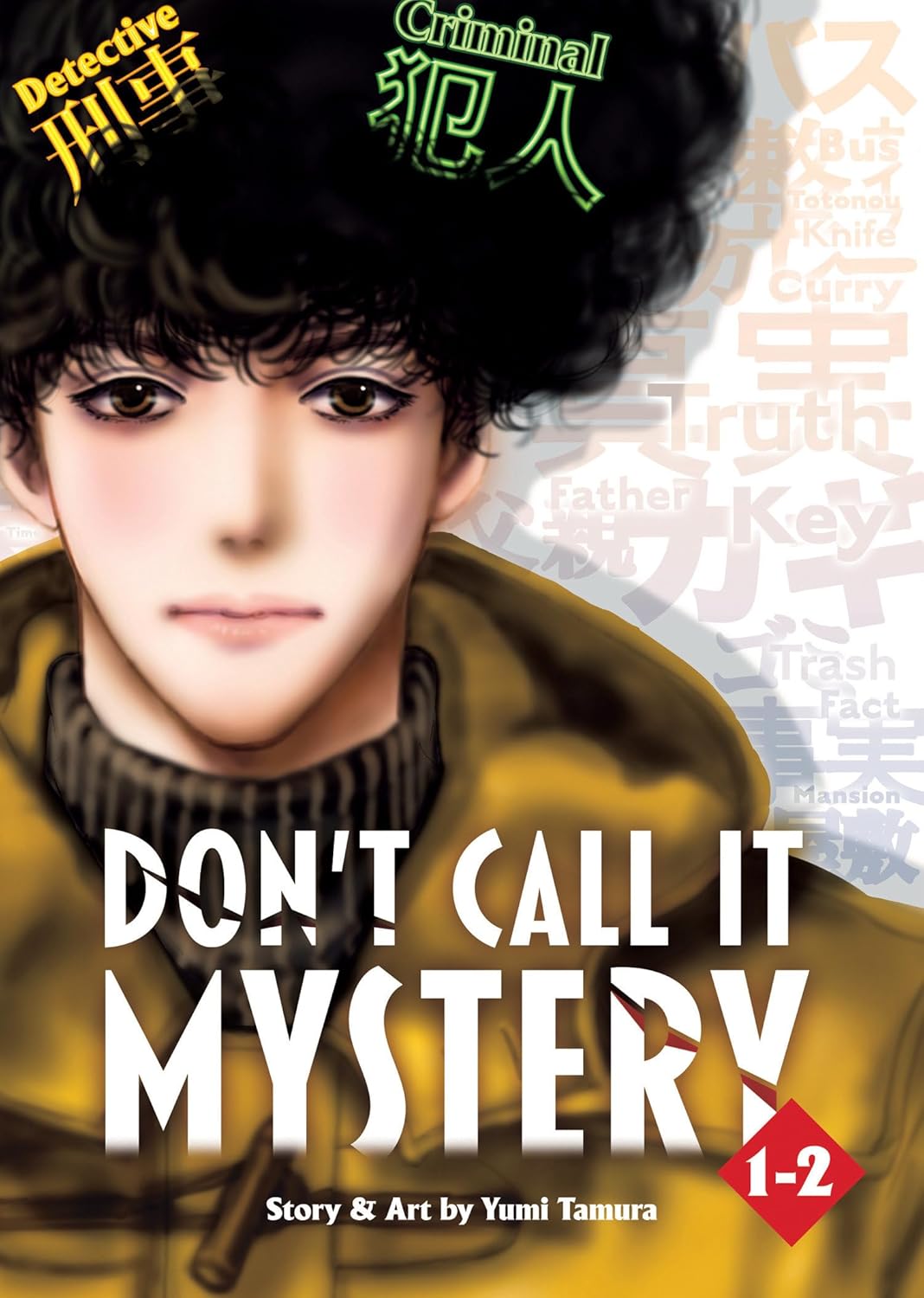
Don’t Call It Mystery (Omnibus) Vol. 1–2
Mushishi — Supernatural Mysteries Told Like Campfire Stories
What makes it cozy
Mushishi is unlike anything else on this list — and probably unlike anything else you’ve read, full stop.
Ginko is a wandering investigator whose title is Mushishi — roughly translated, “one who studies mushi.” And mushi are ancient, barely-visible life-forms that exist beneath ordinary human awareness: not quite spirits, not quite parasites, somewhere between a natural force and a ghost. They intersect with human lives in strange ways: a child who can’t stop drawing, a village where everyone hears music no one else can hear, a woman who weeps rivers of water she can’t explain. Ginko travels from place to place, learns what’s happening, and tries to help.
Each chapter is a complete, standalone mystery. There are no cliffhangers, no overarching threat, no villain. You can read a single chapter, close the book, and feel satisfied. The atmosphere is quiet and melancholy — not scary, not dark, not violent. It feels like sitting around a fire listening to folk tales.
Does Mushishi strictly pass the “cozy” test? Three of the four markers, clearly yes. The fourth — resolution brings order — is where it gets nuanced. Ginko almost always finds an answer, and reaching that understanding restores something even when it can’t fix everything. Think of it less as “all is well” and more as “the mystery is understood, and that is enough.” For readers who love cozy mysteries for the puzzle and the atmosphere rather than a perfectly tidy ending, that distinction won’t matter much at all.
Why beginners love it
The series is 10 volumes and complete. That matters more than it sounds. With Mushishi, you know exactly what you’re committing to. There’s no “wait for the next volume” anxiety, no worry about whether the story will ever end. You can read the whole thing at your own pace and have a finished, satisfying experience.
There’s no ongoing plot to track, no magic ability system to understand, no long competitive storyline. Just Ginko, the road, and a new mystery in each chapter. Readers who grew up loving Studio Ghibli films — Spirited Away, Princess Mononoke, Nausicaä — often feel immediately at home with Mushishi’s sensibility.
A Collector’s Edition omnibus — a larger, hardcover collected edition — launched in November 2025, so there are now two formats to choose from: individual volumes or the omnibus edition for more story per book.
Content note: Rated 16+. There is no violence, but some chapters end sadly — not in a traumatic way, more in a “that’s how the world is sometimes” way. If bittersweet endings are fine with you, this one is wonderful.

Mushishi Vol. 1
Quick Comparison: Which One to Start With?
| Apothecary Diaries | Don’t Call It Mystery | Mushishi | |
|---|---|---|---|
| Setting | Imperial China | Modern Japan | Rural Japan (historical) |
| Mystery type | Medical / court intrigue | Everyday observation | Supernatural folklore |
| Tone | Witty, warm | Dry, cozy | Quiet, melancholy |
| Violence | None in Vol. 1 | None | None |
| Volumes (English) | 15+ ongoing | 14+ ongoing (omnibus) | 10, complete |
| Best for | Fans of historical drama | Fans of mystery novels | Fans of Ghibli / folklore |
Not sure where to land? Here’s a quick shortcut:
- If you love Agatha Christie or Richard Osman, go straight to Don’t Call It Mystery. It’s the closest match to what cozy mystery readers already love about the genre.
- If you’re drawn to historical settings and sharp-witted heroines, The Apothecary Diaries Vol. 1 is a genuinely great entry point — just be aware the series gets darker in later volumes.
- If you want something complete, standalone, and unlike anything else, Mushishi is SO good and there’s a real chance it becomes your favorite manga ever. Just grab Vol. 1 and see for yourself.
FAQ: Cozy Mystery Manga for Beginners
Is manga easy to read if I’ve never tried it before?
Yes — and these three picks are among the most accessible entry points available. One practical note for first-timers: manga reads right-to-left, starting from what looks like the “back” of the book. Every publisher includes a note on the first page explaining this, so you won’t be left guessing when you open it for the first time.
Do I need to read every volume, or can I try just one?
All three series here are designed so that the first volume (or the Vol. 1–2 omnibus for Don’t Call It Mystery) gives you a complete, satisfying experience on its own. There’s no commitment involved. Try one — if you love it, there’s more. If it’s not your thing, that’s fine too.
Are these beginner-friendly for adults, or aimed at younger readers?
All three are adult reads. Mushishi is rated 16+; The Apothecary Diaries is rated Teen (13+). Don’t Call It Mystery is rated T+ (Older Teen / 16+), meaning it’s appropriate for a wide range of ages — but the sensibility and dry humor are very much aimed at adult readers, not children.
Where to Buy
All three series are in print and available now. A few things worth knowing before you buy:
- The Apothecary Diaries Vol. 1 is a standard single volume, typically around $13–$15. Easy starting point. Widely stocked at Target, Barnes & Noble, and Amazon.
- Don’t Call It Mystery is only available as omnibus volumes in English — the entry point is the Vol. 1–2 omnibus, around $24.99. You get two volumes’ worth of story, so it’s good value.
- Mushishi is available as individual volumes or the new Collector’s Edition omnibus (launched November 2025). The individual Vol. 1 is the cheaper option if you just want to try it first.
All three are available through Amazon, Barnes & Noble, and most independent bookstores. It’s also worth checking your local library — many library systems carry manga, and these titles are popular enough that a hold request is often fulfilled quickly.
Leave a Reply